

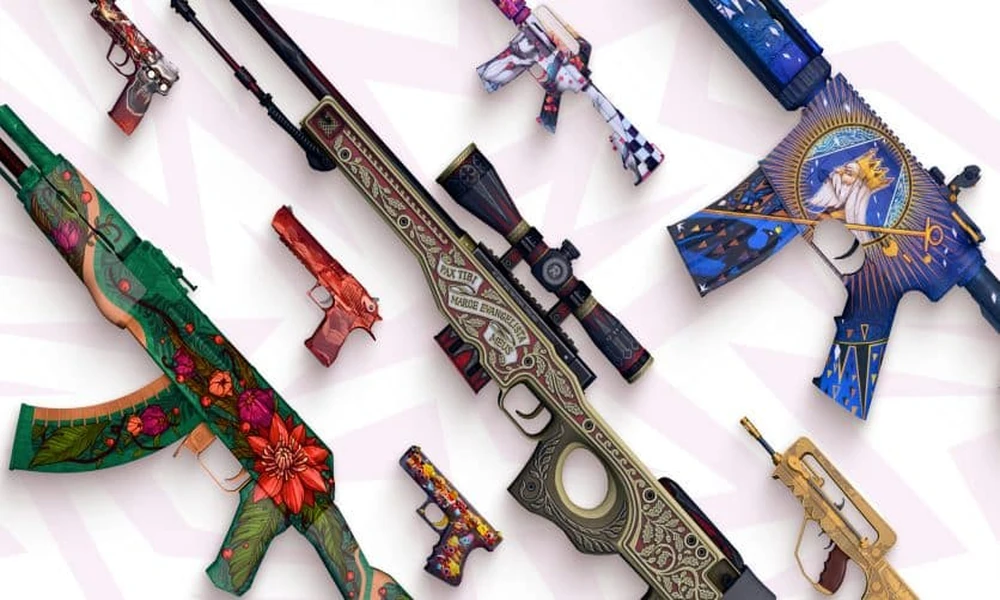
In CS2, every skin carries a designated rarity classification that determines how frequently it appears during unboxing sequences. case battles follow this same structure, meaning every skin surfaced during a battle room round obeys the same drop weight rules applied in standard unboxing. These tiers range from the most accessible grades to the scarcest, each identified by a specific colour that appears consistently across all item displays within the game. Consumer-grade skins, marked in white, occupy the base of this hierarchy. Industrial-grade items in light blue sit one level above. Mil-spec skins in darker blue represent a middle ground, while Restricted items in purple appear with noticeably lower frequency. Classified skins in pink and Covert skins in red are positioned at the upper end of the scale. A separate contraband classification exists above all standard tiers, with only a single known skin holding that status across the entire game.
How do tiers work?
Each round inside a battle room is governed entirely by the probability weights embedded within the case being opened. The format itself does not alter drop rates. A mid-tier case selected for a session will produce outcomes consistent with its own built-in rarity distribution, regardless of how many players are participating or how many rounds the session contains.
- Higher-tier cases expand the pool of classified and covert possibilities available within each round.
- Consumer and industrial-grade skins continue to appear regularly across all case types.
- Drop probabilities remain fixed whether a skin is opened in a solo session or inside a battle room.
The case selection made before a session begins is, therefore, the primary variable shaping what rarity tiers can realistically surface throughout play.
Rare skin frequency
Covert skins carry the lowest individual drop probability within any standard case, typically sitting well below one per cent. Classified items appear with slightly greater frequency, though they remain infrequent enough that surfacing one during a round draws clear attention. Mil-spec skins form the majority of visible outcomes across most sessions, given their comparatively accessible drop weight, which means most rounds will show a consistent cluster of mid-tier results with higher rarities appearing at irregular intervals.
The collective nature of battle room play does increase the total number of cases opened within a single session. This does not change individual drop probabilities, but it does raise the overall occurrence of high-tier skins visible across the full round, since more cases are being resolved simultaneously rather than sequentially.
Special item classifications
StatTrak variants and souvenir editions introduce a secondary classification layer that sits on top of the core rarity tier system. A covert skin carrying a StatTrak modifier is categorised differently from a standard covert drop, placing it in a further elevated position within the item hierarchy. Battle room rounds fully reflect this layering in their outcomes.
- StatTrak versions exist across multiple rarity tiers and are not exclusive to covert or classified grades.
- Souvenir variants are tied to specific cases and only appear where the underlying case design supports them.
- Knife and glove items occupy a dedicated rare special item category, separate from the standard covert tier entirely.
These additional classifications mean that even within a single rarity grade, item outcomes can vary considerably depending on modifier status and case origin. A player who regularly tracks which cases carry StatTrak or souvenir support will have a clearer picture of what the full range of possible outcomes looks like before a session starts. Rarity tiers inside battle room rounds are fully consistent with the structure built into each case, choosing the case the single most consequential decision in shaping what any round will produce.
